
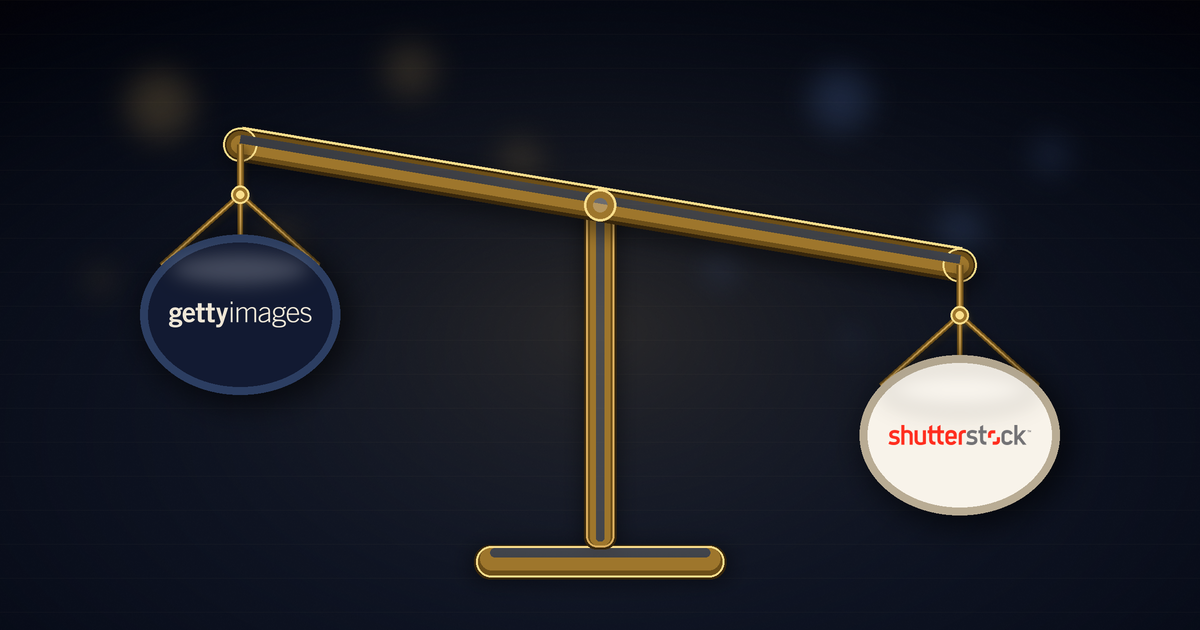
Getty Images (GETY) and Shutterstock (SSTK) both made the Magic Formula screen, but only one of them looks attractive after the second step. Shutterstock is the interesting side of the proposed Getty-Shutterstock merger because its stock price appears to discount the deal heavily, the main remaining risk is now clearly the U.K. CMA review, and SSTK holders still have a healthier standalone business to fall back on if the transaction breaks. Getty is the wrong side because it is the weaker, more leveraged company in the deal, and if the merger fails, GETY shareholders are still left with the same stretched balance sheet but without the added revenue and synergy story management is using to justify the transaction. For Magic Formula investors, that is the core takeaway: SSTK is the opportunity; GETY is the risk.
The Deal, In Plain English
Getty and Shutterstock announced their combination in January 2025. The companies call it a merger-of-equals, but for investors the more useful way to think about it is simpler: Shutterstock holders are being asked to sell into a package of Getty stock and cash, and the value of that package depends heavily on what Getty stock is worth when the deal closes.
If the transaction closes, each Shutterstock share can be elected into one of three forms of consideration:
- $28.8487 in cash
- 13.67237 Getty shares
- 9.17 Getty shares plus $9.50 in cash
That election structure is why SSTK is the natural place to look for arbitrage. Shutterstock trades today, but its eventual value depends on three things: whether the deal closes, what Getty stock is worth at closing, and how much of the shareholder base asks for cash versus stock.
The deal has already cleared the U.S. Department of Justice. The main remaining obstacle is the U.K. Competition and Markets Authority, or CMA, which is reviewing the combination because of overlap in editorial imagery.
That matters because the CMA is now the key gating risk. It has provisionally concluded that the merger is not a major problem in global stock content, but it may substantially lessen competition in the U.K. editorial market. In April, the CMA said Getty's proposed remedy was not enough and signaled that a sale of Shutterstock's Rex Features, Backgrid, and Splash News businesses would likely be a more acceptable fix. The statutory deadline for the CMA's final report is June 14, 2026.
Why SSTK Is The Better Side To Arbitrage
This is where the merger math becomes more important than the headline press release.
At today's prices, the $28.85 cash election is obviously the best option on paper for Shutterstock holders. That is exactly why it represents such a large apparent upside versus SSTK's current trading price around $16 to $17. It is also why that cash option is almost certain to be oversubscribed.
The market clearly understands that. If Getty stock stays around its recent $0.89 level, the all-stock election is worth only about $12.17 per Shutterstock share, and the mixed election is worth about $17.66. So SSTK is not trading as if everyone gets the full cash election. It is trading more like investors expect a mixed or stock-heavier outcome, with meaningful closing risk layered on top.
That skepticism is what creates the opportunity. If the CMA risk starts to clear and Getty stock trades higher, the value of the stock-heavy consideration rises fast. At $1.25 per GETY share, the mixed option would be worth about $20.96 and the all-stock option about $17.09. At $1.50, those values rise to roughly $23.26 and $20.51.
There is an important caveat. The companies are not offering unlimited cash to every Shutterstock holder who wants it. The overall cash pool and stock pool are fixed for the whole deal. If too many Shutterstock holders elect cash, the agreement says those cash elections are cut back pro rata across the cash-electing record holders, and the remainder of those shares flips into Getty stock instead. In plain English, yes: some of your elected shares could receive the full cash payout while the rest of your elected shares get stock-only consideration. They do not automatically flip into the formal mixed election.
That also means the fixed mixed election is only one point on a broader range of possible outcomes. Economically, the mixed election is basically the same as getting cash on about one-third of your shares and stock on the other two-thirds. So a prorated cash election could be better than the formal mixed election if more than roughly one-third of your shares actually get cash, and worse if less than that get cash.
So this is not a simple cash deal spread. It is an event-driven setup where the best-looking outcome is the cash option, but the likely realized outcome is at least partly shaped by proration and by what Getty stock does into closing.
SSTK also still gets a ✅ Pass from MagicDiligence, which matters because this is not just a paper spread. The underlying company has had a rough patch, but the balance sheet is still workable and there is no obvious fraud cloud or financial distress overwhelming the case. For the full company-level background, see the MagicDiligence report on Shutterstock.
Why The Downside Is Worse For GETY
The most important part of this article is not the upside. It is the downside asymmetry.
If the deal closes, Shutterstock holders can do well because the market is currently discounting the value of the merger consideration. If the deal fails, Shutterstock holders still own a relatively healthy operating business that already passed the deeper MagicDiligence review. The stock could fall on a broken deal, but there is still a real business underneath it.
Getty shareholders do not have the same protection.
GETY still gets a ❌ Fail from MagicDiligence for a simple reason: the balance sheet is too stretched to ignore. Getty ended 2025 with roughly $2.0 billion of debt, heavy interest expense, a sub-$1 stock price that triggered an NYSE notice, and merger financing that only makes sense if the transaction actually closes.
If the merger fails, GETY holders are still left with the same leveraged company, the same refinancing pressure, the same sub-$1 share price problem, and none of the extra revenue or synergy story management is using to sell the transaction. In other words, Shutterstock has a standalone fallback. Getty mostly has a hope-that-the-deal-fixes-it story.
That is another key reason SSTK is the better side of this setup. Only one side has meaningful downside protection if the transaction breaks. For the deeper company-level work, see the MagicDiligence report on Getty Images.
What Magic Formula Investors Should Take Away
As argued in Why the Magic Formula Needs One More Step, the screen is doing its job here, but only if you use the second step.
Getty made the list because cheap, leveraged, asset-light businesses can still look great in mechanical screen data. Shutterstock made the list because the underlying business and balance sheet still hold up well enough to survive the closer review.
If you are a Magic Formula investor, the message is simple: stay away from GETY.
If you are willing to do event-driven work, SSTK is the more interesting situation. It is the healthier company, it already passed the deeper screen, and the merger creates a plausible arbitrage setup on top of that stronger standalone base.
If you want to compare GETY and SSTK with the rest of the current shortlist, click back to the current MagicDiligence screen results.
References
- MagicDiligence report on Getty Images
- MagicDiligence report on Shutterstock
- Getty Images Annual Report for fiscal 2025
- Getty Images reports fourth quarter and full year 2025 results
- Getty Images receives notice from NYSE regarding continued listing standard
- Shutterstock Quarterly Report for March 31, 2026
- Getty Images and Shutterstock merger announcement